

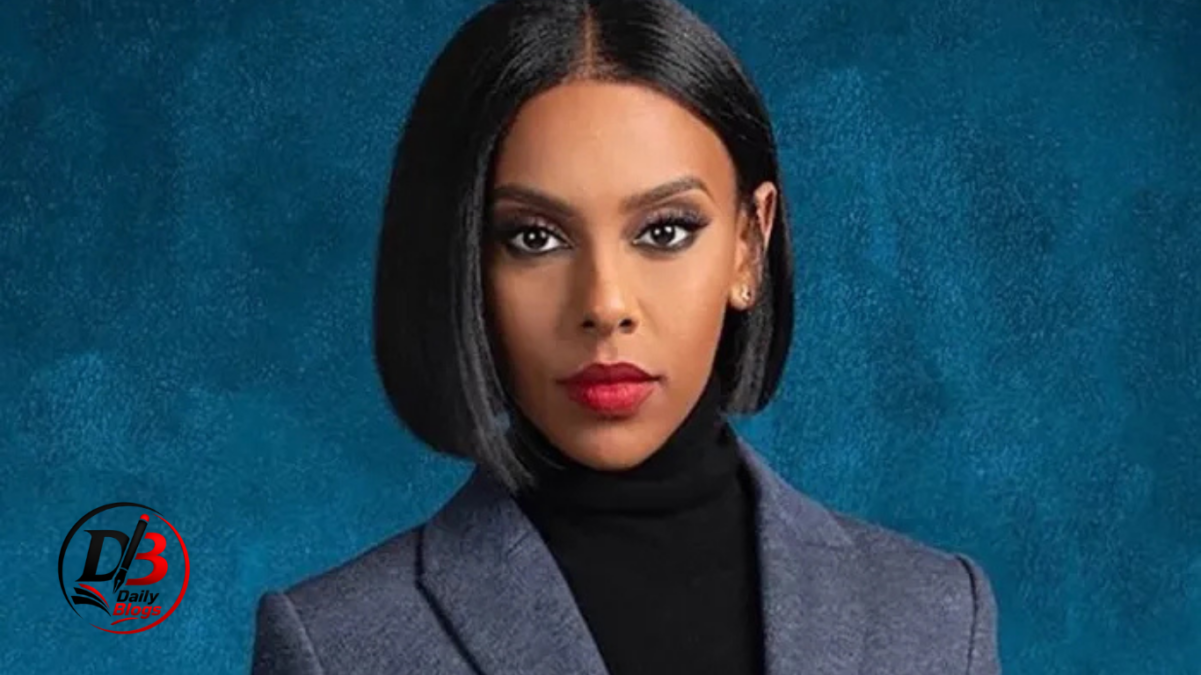
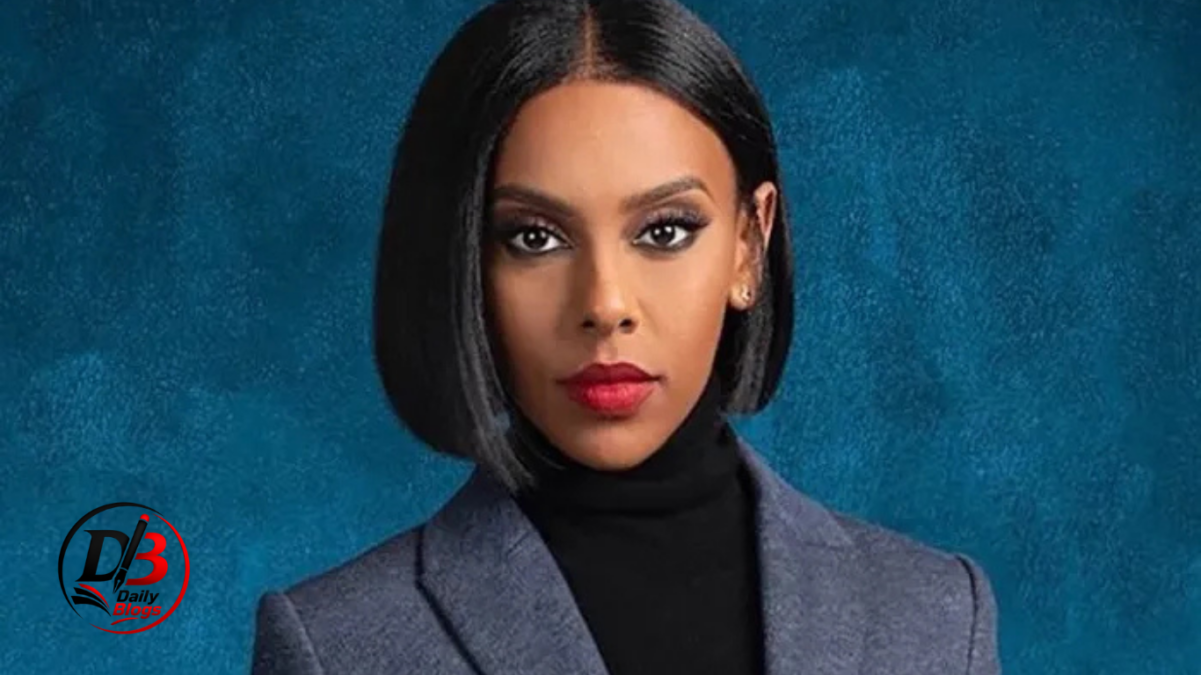
Yodit Tewolde has become a familiar face to daytime television audiences as one of the three judges on the syndicated court show Hot Bench. With her sharp legal mind, calm authority and distinctive style, she brings both expertise and presence to the bench. Yet her path to television began far from the studio lights.
Born to Eritrean parents who fled conflict, raised in Dallas, and shaped by years in criminal law, Yodit Tewolde represents a compelling story of determination and public service. Viewers and followers remain drawn to her because she pairs professional credibility with an authentic personal narrative that feels grounded rather than manufactured. Her work as a lawyer, analyst and now television judge continues to spark interest in how immigrant experiences and a commitment to justice can shape a high-profile career.
Early Life and Background
Yodit Tewolde was born in Khartoum, Sudan, after her Eritrean parents sought refuge there during the Ethiopian-Eritrean conflict. When she was around nine months old, the family immigrated to the United States and settled in Dallas, Texas. She has spoken openly about this background, describing refugee status as a badge of courage rather than a limitation. On World Refugee Day she has shared family photographs from Sudan and reflected on the resilience required to start again in a new country.
Growing up in Dallas, she navigated the dual identity of an African immigrant family within an American setting. She has described the challenge of balancing cultural expectations at home with the wider environment outside it. Her mother, in particular, emerges in her public comments as a strong influence, emphasising hard work and self-reliance. Yodit attended W.T. White High School, where she joined the debate team. The experience of researching, structuring arguments and speaking clearly proved formative and pointed her towards the law.
She went on to Texas A&M University, earning a Bachelor of Arts in English with a minor in Communications. While there she became a member of Delta Sigma Theta Sorority. She then attended Southern University Law Center from 2006 to 2009, obtaining her Juris Doctor. During law school she served as Editor-in-Chief of the Journal of Race, Gender and Poverty. These years equipped her with both academic grounding and a growing interest in criminal justice issues.
Career and Rise to Fame
After graduating, Yodit Tewolde joined the Texas Bar in 2010. She began as a law clerk for the Honourable Trudy M. White in the 19th Judicial District Court. She later became an Assistant District Attorney in the Dallas County District Attorney’s Office, working under Craig Watkins, the first Black district attorney in Texas. There she handled cases in both adult and juvenile systems and developed her skills as a trial lawyer.
In January 2014 she left the prosecutor’s office and founded her own criminal defence firm, the Law Office of Yodit Tewolde, PLLC. She has described the move as a deliberate decision to stop limiting her challenges and start challenging her limits. The firm focused on client-centred representation for people facing criminal charges. In 2016 the National Bar Association recognised her among America’s top lawyers under 40. She also received local acknowledgements, including being named one of the 10 Most Beautiful Women in Dallas by D Magazine and appearing on lists of influential young Pan-African women and successful women in Dallas.
Her media career developed alongside her legal practice. She began providing legal analysis on networks including CNN, MSNBC, Fox News and HLN. In 2019 she joined the relaunched Court TV as a morning anchor, covering major trials. She later hosted and served as managing editor of Making the Case, a criminal justice programme on Black News Channel (later The Grio TV). She also appeared as a host-contributor on the reboot of America’s Most Wanted. In 2018 she briefly served as an Associate Municipal Judge for the City of Dallas.
In 2022 Yodit Tewolde joined Hot Bench, the court show created by Judge Judy Sheindlin. She has acknowledged that she once said she would never do a judge show, viewing some of them as potentially exploitative. The involvement of Judge Judy and the programme’s focus on real cases persuaded her. She has been a regular panel member since Season 9, sitting alongside colleagues such as Rachel Juarez and, more recently, Daniel Mentzer. The show has maintained strong ratings and, in 2025, received a Daytime Emmy Award for Outstanding Legal/Courtroom Program. Tewolde has publicly expressed pride in the recognition.
Personal Challenges or Turning Points
Public accounts of Yodit Tewolde’s life highlight the adjustments required by her family’s refugee journey and the practical demands of building a dual career in law and media. She has spoken about the discipline needed to pass the bar examination, describing the three-day test and the long wait for results as particularly taxing. Launching her own firm in 2014 required stepping away from the relative security of a prosecutor’s salary and embracing uncertainty. She has framed that decision as essential for progress.
Her transition into television also involved recalibrating earlier reservations about courtroom shows. She has emphasised that she takes the law seriously and wants any on-screen work to educate rather than merely entertain. These professional shifts, rather than dramatic personal crises, appear to be the clearest turning points in the publicly available record. Where information is limited, no reliable sources confirm additional private struggles, and speculation is best avoided.
Personal Life
Yodit Tewolde keeps her private life carefully guarded. Reliable public sources do not confirm marriage, a spouse or children. She has not shared details about romantic relationships in interviews or on social media. She has occasionally posted about her dog, Miles, and has spoken warmly about her mother. Beyond these elements, she maintains clear boundaries between her professional visibility and personal matters. Any claims about her marital status remain unverified by primary or consistently reliable reporting.
Later Career and Current Activities
As of 2026, Yodit Tewolde continues as a judge on Hot Bench, which remains one of the leading syndicated court programmes. She makes regular appearances as a legal analyst on major cable news networks and has contributed opinion pieces in the past. She is booked as a public speaker, with fees typically ranging from $10,000 to $20,000 for live events. Her social media presence, particularly on Instagram, reflects both her professional work and a growing interest in fashion and personal style. Recent coverage has noted her move towards more colour and distinctive tailoring while retaining a preference for clean, well-cut pieces.
She has used her platform to discuss criminal justice issues, immigrant experiences and the importance of accurate legal understanding. Her Eritrean heritage remains part of her public identity; she has marked Eritrea’s Independence Day and Refugee Day with reflective posts. No major independent business ventures or large-scale charity foundations are prominently documented in reliable sources, though her speaking and media work continue to expand her reach.
Quick Bio
| Detail | Information |
| Full Name | Yodit Tewolde |
| Date of Birth | Reportedly 10 December 1982 |
| Place of Birth | Khartoum, Sudan |
| Nationality | American (Eritrean heritage) |
| Profession | Criminal defence attorney, television judge, legal analyst |
| Years Active | Approximately 2010–present |
| Known For | Judge on Hot Bench; Court TV host; legal analysis |
| Estimated Net Worth | Approximately $2 million (various estimates) |
Note: Date of birth appears consistently as December 1982 in many secondary sources, though exact primary confirmation is limited. Net worth figures are estimates drawn from career earnings and public profiles.
Legacy and Lasting Impact
Yodit Tewolde’s importance lies in the combination of practical legal experience and visible media presence. She demonstrates that a career can move between prosecution, defence, analysis and adjudication without losing seriousness of purpose. For many viewers she offers a model of an immigrant professional who has succeeded in both traditional legal roles and contemporary television. Her insistence on treating the law with respect, even in an entertainment format, contributes to a more informed public conversation about justice.
Public perception tends to focus on her competence, composure and style. She is frequently described as stylish yet authoritative, and her refugee background adds a layer of relatability for audiences interested in stories of mobility and achievement. The broader lesson from her path is the value of adaptability paired with professional grounding: debate skills in high school, prosecutorial experience, entrepreneurial risk and eventual openness to television all built on one another.
Conclusion
The story of Yodit Tewolde is one of steady progression rather than sudden transformation. From a childhood shaped by her parents’ decision to seek safety, through education in Texas and years in the criminal justice system, she has built a career that now reaches a national television audience. Her work on Hot Bench and as a legal commentator continues to introduce viewers to the practical realities of the law while reflecting her own commitment to fairness and clarity.