Few dishes inspire the same warm nostalgia as corn casserole Jiffy-style. Whether it appears on a Thanksgiving table, at a summer potluck, or as a simple midweek side, this humble bake has earned a devoted following across generations. Its charm lies not in complexity, but in the opposite: a handful of everyday ingredients transformed into something comforting, sweet, and satisfying.
For many home cooks, corn casserole Jiffy recipes represent more than just a side dish. They’re a link to family gatherings, shared kitchens, and recipes passed down without ever being written formally — remembered instead through habit and taste. That sense of familiarity is a large part of why the dish continues to be searched for, shared, and recreated so widely today.
This article explores where the recipe came from, how it developed its distinctive character, the variations cooks have created over the years, and why corn casserole Jiffy remains such an enduringly popular choice at the table.
What Is Corn Casserole Jiffy, Exactly?
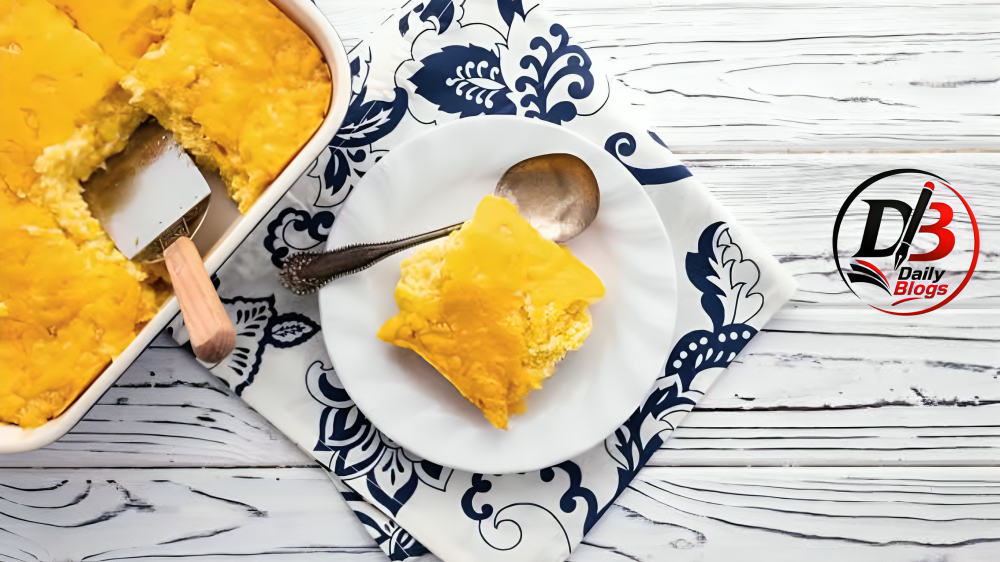
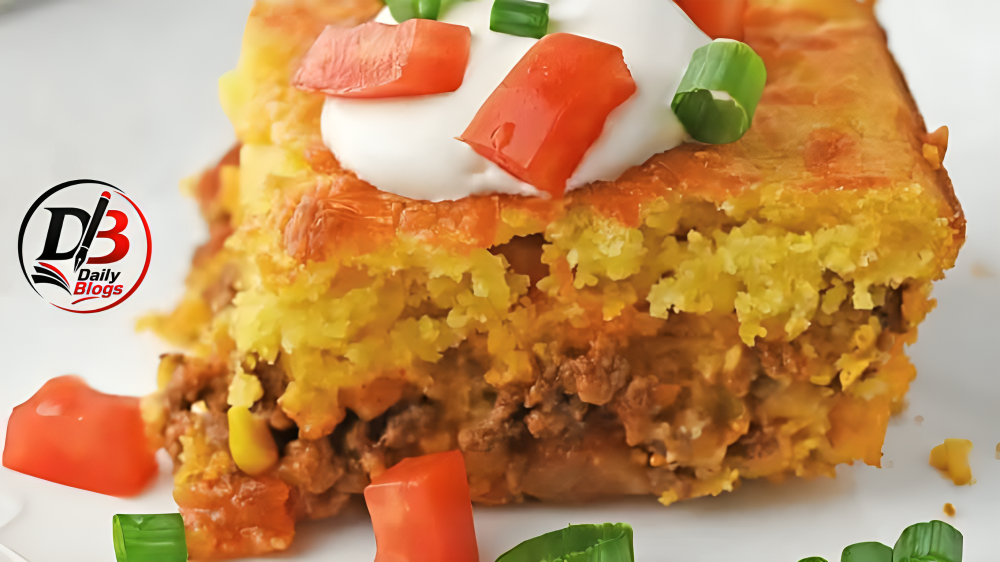
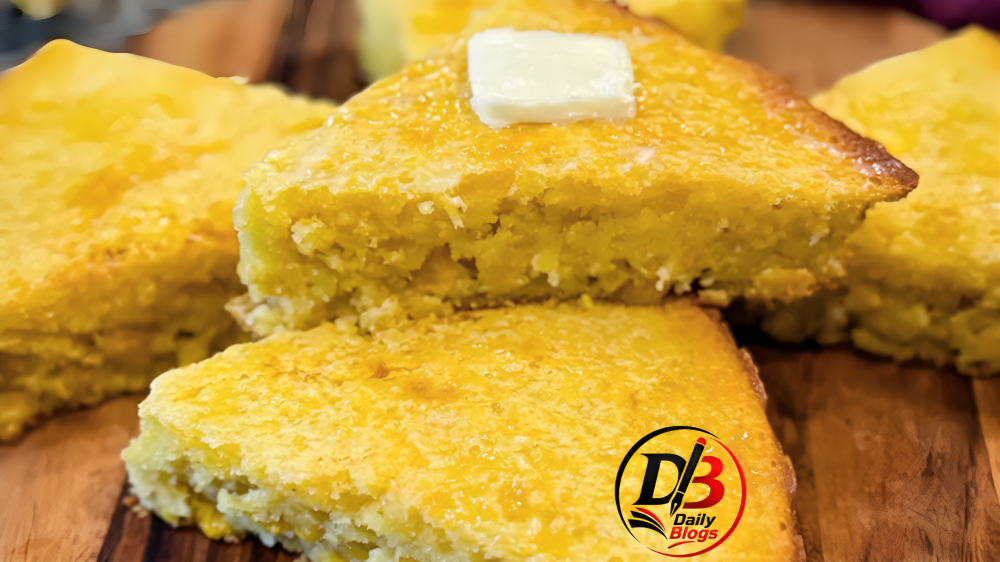
At its core, corn casserole Jiffy is a baked side dish built around Jiffy Corn Muffin Mix, a widely available boxed cornbread mix first produced by the Chelsea Milling Company in Michigan. Combined with tinned or creamed corn, sour cream, butter, and eggs, the mix bakes into something closer to a custardy spoonbread than a traditional cornbread — soft in the centre, lightly golden on top, and gently sweet throughout.
Unlike a savoury cornbread meant to be sliced and buttered, this casserole is spooned straight from the dish, making it a natural companion to roasted meats, barbecue, or holiday spreads. Its texture — somewhere between a soufflé and a pudding — is part of what sets it apart from other corn-based sides.
Origins and Background
The exact origins of corn casserole Jiffy are difficult to pin down with certainty, as is often the case with recipes that spread through community cookbooks, church suppers, and family kitchens rather than formal publication. What is well documented, however, is the history of its key ingredient.
Jiffy Corn Muffin Mix has been produced since the 1950s and remains one of the most recognisable boxed baking mixes in American kitchens, known for its affordability and simplicity. As convenience baking grew in popularity through the latter half of the twentieth century, home cooks began experimenting with the mix beyond its intended use as muffins, folding it into casseroles, stuffings, and bakes.
Corn casserole appears to have emerged from this same spirit of practical, ingredient-stretching home cooking. Recipes using boxed corn muffin mix alongside tinned corn and sour cream began circulating widely in community and church cookbooks from the 1970s and 1980s onward, particularly across the American South and Midwest, where corn-based dishes already held a strong culinary tradition.
While no single person or publication can be reliably credited as the dish’s originator, its rise reflects a broader pattern in home cooking: a recipe refined collectively, through repetition and small adjustments, until it became a standard.
Rise to Popularity
Corn casserole Jiffy’s popularity grew steadily rather than suddenly, spreading largely through word of mouth, community cookbooks, and family tradition. It became particularly associated with autumn and winter gatherings, especially Thanksgiving, where its sweetness and soft texture offered a pleasant contrast to richer, savoury dishes.
The rise of internet recipe-sharing in the 2000s and 2010s gave the dish a considerable further boost. Food blogs and recipe websites began publishing their own versions, often with small personal twists, helping the casserole reach a much wider audience beyond the regions where it had traditionally been popular. Searches for corn casserole Jiffy recipes tend to spike predictably each November, reflecting its strong association with Thanksgiving menus.
Its accessibility has also played a major role in its lasting popularity. With only a handful of ingredients and minimal preparation time, it has become a reliable choice for cooks who want a dependable, crowd-pleasing side without excessive effort — a quality that has helped it endure even as food trends have shifted toward more elaborate presentations.
Challenges and Common Misconceptions
As with many well-loved recipes, corn casserole Jiffy has faced its share of debate and minor controversy — mostly good-natured. Cooks often disagree on details such as whether to use creamed corn, whole kernel corn, or a combination of both, and how much sugar (if any) should be added given that the mix itself already contains some sweetness.
There has also been occasional confusion around availability. Jiffy Corn Muffin Mix is primarily sold in the United States, which has meant that home cooks in other countries, including the UK, sometimes need to substitute a homemade cornbread mix or source the product through speciality retailers. This has led to numerous adapted versions of the recipe designed for cooks without direct access to the original mix.
It’s worth noting clearly: no verified public information suggests any formal dispute over the recipe’s origin, nor any official acknowledgement from Chelsea Milling Company claiming ownership of the casserole recipe itself. The dish remains, essentially, a piece of communal home cooking rather than a proprietary creation.
The Classic Recipe
While variations abound, the traditional version of corn casserole Jiffy typically includes:
- One box of Jiffy Corn Muffin Mix
- One tin of creamed corn
- One tin of whole kernel corn, drained
- One cup of sour cream
- Half a cup of melted butter
- Two eggs
The ingredients are combined and poured into a greased baking dish, then baked at a moderate oven temperature — generally around 175°C (350°F) — for approximately 45 minutes, or until the top turns golden and the centre is set but still moist.
The result is a side dish that balances sweetness and savoury depth, with a texture soft enough to serve alongside gravies and sauces without competing for attention.
Popular Variations
Cooks have adapted the base recipe in numerous ways over the years, reflecting both regional tastes and personal preference. Common variations include:
Cheesy corn casserole — incorporating shredded cheddar into the mixture or sprinkled on top for a richer, savoury finish.
Spicy corn casserole — adding chopped jalapeños or a pinch of cayenne pepper for those who prefer a subtle heat.
Bacon corn casserole — folding in crumbled bacon for added texture and smokiness.
Gluten-free corn casserole — substituting a gluten-free cornbread mix for those with dietary restrictions.
Slow-cooker corn casserole — adapting the recipe for a slow cooker, useful for freeing up oven space during busy holiday cooking.
Each variation retains the essential character of the original while allowing cooks to tailor it to their own households and occasions.
Serving Suggestions and Occasions
Corn casserole Jiffy is most commonly served as an accompaniment to roasted or grilled meats, particularly turkey, ham, and barbecue dishes. Its sweetness pairs well with savoury, smoky, or peppery mains, which is part of why it has become such a fixture at Thanksgiving and Christmas tables in particular.
Beyond the holidays, it also appears regularly at potlucks, family reunions, and summer barbecues, where its make-ahead convenience is especially valued. The dish can typically be prepared in advance and reheated without significant loss of texture, making it practical for larger gatherings.
Storage, Freezing, and Reheating
For those planning ahead, corn casserole Jiffy generally keeps well in the refrigerator for three to four days when stored in an airtight container. It can also be frozen, either before or after baking, though texture is often best preserved when frozen unbaked and cooked fresh when needed.
When reheating, a low oven temperature tends to preserve the casserole’s moist texture better than a microwave, which can cause the edges to dry out unevenly.
Why the Recipe Endures
Part of the lasting appeal of corn casserole Jiffy lies in its simplicity. In an era of increasingly elaborate recipes and specialist ingredients, a dish that requires only a handful of pantry staples and minimal preparation continues to resonate with home cooks seeking reliability over spectacle.
Its association with family gatherings and holiday traditions also plays a significant role. For many, the dish is inseparable from specific memories — a particular relative’s kitchen, a recurring holiday menu, or a first attempt at cooking for a family occasion. This emotional resonance helps explain why the recipe continues to be searched for and shared so consistently, year after year.
Conclusion
Corn casserole Jiffy is, in many ways, a quiet success story of home cooking: a recipe built from convenience ingredients that grew, through repetition and shared kitchens, into a genuine tradition. It has never relied on culinary trends or elaborate technique — only on consistency, comfort, and the simple pleasure of a warm, familiar dish on the table.