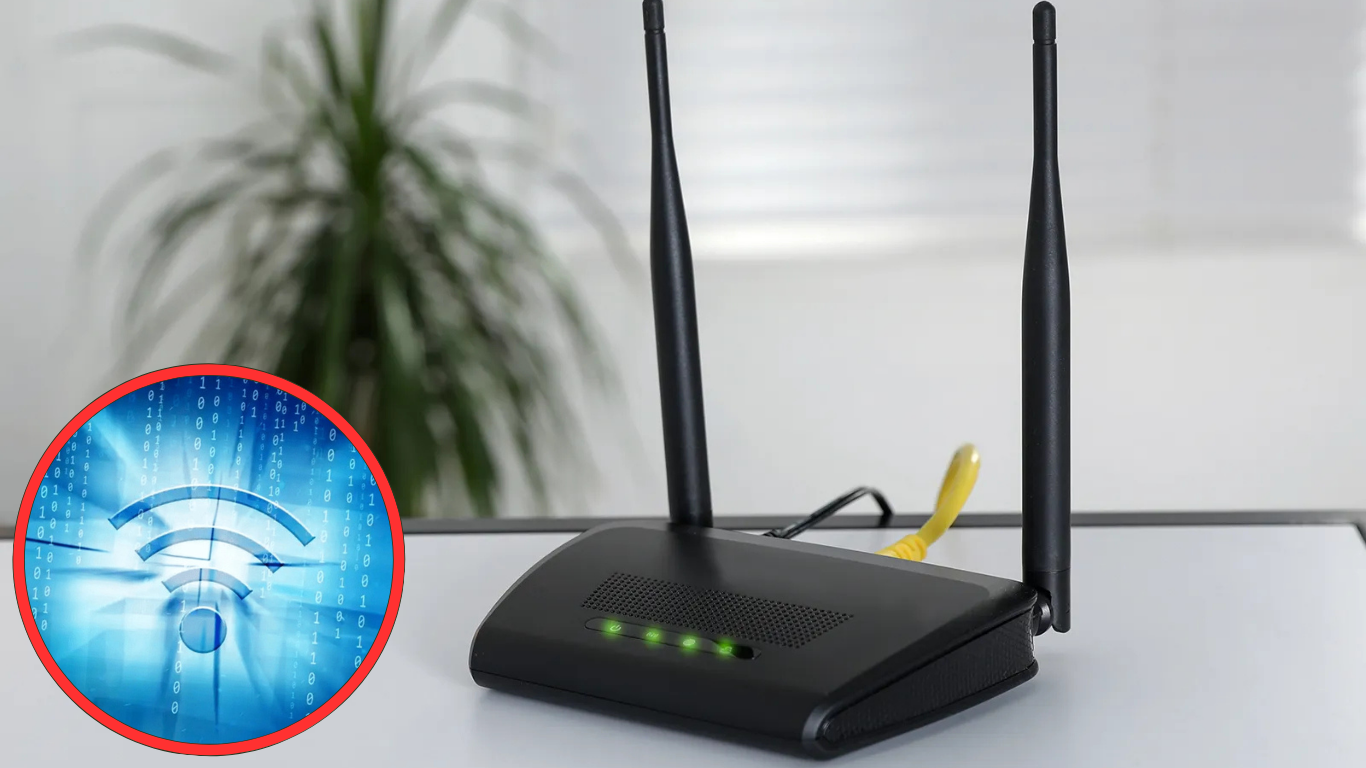
Wifinity is a UK-based managed internet provider that has built its reputation by delivering reliable Wi-Fi and broadband in places where conventional connections are often difficult, slow or impractical. Founded in 2007, the company began by connecting military accommodation before expanding into holiday parks, student housing, residential developments, care settings and other complex environments.
Interest in Wifinity comes not from celebrity or entertainment, but from the company’s unusual origin story and its role in tackling the UK’s digital divide. Its work demonstrates how a relatively specialised internet provider can grow by focusing on communities and organisations overlooked by traditional broadband models.
What Is Wifinity?
Wifinity is a managed internet service provider offering site-wide Wi-Fi, broadband and network infrastructure for both organisations and their customers. Its services are designed particularly for multi-tenant and multi-site environments, including military barracks, student accommodation, holiday parks, retirement communities and residential developments.
Unlike a conventional home broadband provider that installs a connection at one address, Wifinity manages networks across entire properties or campuses. This may involve designing the network, installing access points, operating the infrastructure and providing customer support.
The company’s work is especially relevant in locations where conventional broadband infrastructure is limited. A holiday park, for example, may need to provide internet access across hundreds or thousands of plots. Likewise, a military base or student accommodation complex may require a secure network that many people can use at the same time.
Wifinity presents itself as a flexible alternative to traditional broadband. Its stated approach includes rapid access, site-wide roaming and flexible pricing models, including services without long-term contracts.
Early Background and Founding
Wifinity was founded in 2007 by Mark Parry. Public information does not provide a detailed account of the founder’s childhood, family background or early life, so those details should not be treated as established facts.
A published interview with Parry states that the idea for Wifinity came from his own frustration with broadband after moving into an apartment. He reportedly faced a long wait for installation and felt that the available service was expensive and inflexible. That experience led him to consider whether there was a more convenient way to provide internet access.
The company’s first major opportunity came through the UK Armed Forces. Wifinity identified that many military barracks were in remote locations where installing traditional landlines could be inconvenient. Mobile coverage could also be unreliable, leaving service personnel with limited ways to connect with family, access online services or relax after work.
According to the company’s own account, its founders installed the first access points themselves. This hands-on beginning shaped Wifinity’s later focus on designing and operating networks in challenging locations rather than simply selling standard broadband packages.
The IT History Society describes Wifinity as a provider of robust Wi-Fi for remote, hard-to-reach and campus-based locations. Its recorded customer sectors include the armed forces, education, hospitality, leisure, care and retail.
Wifinity’s Rise and Expansion
Wifinity’s development can be understood through a series of sector expansions.
From defence to holiday parks
The company’s early defence work gave it experience in delivering connectivity across large and complicated sites. In 2013, it moved into the holiday park sector, where reliable Wi-Fi was becoming an increasingly important part of the visitor experience.
Holidaymakers often expect to remain connected while travelling, whether they are booking activities, contacting relatives, working remotely or using entertainment services. However, holiday parks can be spread over large areas and may not have the same infrastructure as urban residential streets.
Wifinity’s model allowed it to provide a managed network across holiday accommodation and outdoor plots. The company’s earlier interview material said that it had become responsible for a large pay-as-you-go holiday park network covering more than 35,000 plots, although the figure reflects information published at the time and may not represent the company’s current scale.
Student and residential accommodation
In 2017, Wifinity expanded further into residential apartments and student accommodation. Its Gigaliving proposition was developed for build-to-rent and build-to-sell developments, where connectivity could be planned as part of the building rather than added later as an individual household service.
This approach is suited to modern developments with shared facilities such as gyms, lounges, roof terraces and communal workspaces. A properly designed network can allow residents to move around the property while remaining connected, subject to the quality and configuration of the installation.
For students, connectivity is particularly important for study, communication and day-to-day life. In build-to-rent developments, high-speed internet has also become part of the wider resident experience offered by property managers.
Acquisitions and wider capability
Wifinity states that it acquired the Optify and Mediaforce brands in 2020. The company says these acquisitions increased its expertise, customer base and service range.
Later investment also supported further expansion. Wifinity reports that Lloyds Development Capital took a majority stake in 2021. Coverage of the company’s subsequent development has referred to additional acquisitions, including Vital WiFi, which specialises in offshore vessel connectivity, and Next Connex, a network connectivity provider.
These moves suggest that Wifinity’s strategy has been to build a broader connectivity platform rather than remain limited to one customer group.
Services and Business Model
Wifinity operates across both business-to-business and business-to-consumer markets. It works with organisations that need a network to serve employees, residents, guests, students or visitors, while also providing the individual access experience for users.
Its services may include:
- Managed Wi-Fi for multi-tenant buildings and campuses.
- Broadband for military accommodation and residential communities.
- Connectivity across holiday parks and leisure sites.
- Network design, installation and ongoing operation.
- Flexible or pay-as-you-go internet packages.
- Secure private networks and site-wide roaming.
- Support for complex, multi-site connectivity requirements.
The company’s strength lies in combining infrastructure with customer management. It does not merely install equipment and leave the client to operate it. Instead, Wifinity positions itself as a long-term partner responsible for maintaining the network and improving the user experience.
That model can be valuable for organisations that do not have the specialist staff or resources to manage a large wireless network themselves. It also means that customer satisfaction depends on more than advertised speeds. Coverage, reliability, ease of sign-up, support and network capacity all matter.
Turning Points and Challenges
Wifinity’s central challenge has always been technical and operational: how to provide dependable connectivity across locations that may be remote, dispersed or heavily used.
Military bases, holiday parks and multi-tenant properties all create different pressures. A network may need to serve many users at once, cope with changing demand and operate across buildings or outdoor spaces. It must also be maintained over time as technology, customer expectations and security requirements change.
The company’s expansion from defence into leisure and residential markets was an important turning point. It demonstrated that the original problem was not exclusive to military accommodation. Students, holidaymakers, residents and care communities could face similar barriers when traditional broadband was unavailable or poorly suited to their environment.
The company also faced the wider pressures affecting the telecommunications industry: competition, rising expectations for speed, infrastructure costs and the need to provide reliable support. Rather than competing solely on price, Wifinity has focused on specialised settings where its experience and managed approach may offer a practical advantage.
Its work has also been presented as part of a broader effort to address digital exclusion. The company’s Good Connections programme has involved charitable donations, employee volunteering and initiatives intended to improve internet access for people facing social or financial disadvantage.
Leadership and Personal Life
Because Wifinity is a company rather than a public figure, the personal-life categories commonly associated with celebrity biographies do not apply in the usual way.
Mark Parry is publicly identified as a co-founder and former chief executive associated with Wifinity. A 2019 interview described him as a Kingston University graduate and a former Y Combinator alumnus, while also stating that he chose to pursue the business rather than accept a scholarship opportunity at MIT.
Those details come from an interview published by The Silicon Review and should be understood in that context. There is no reliable public information in the sources reviewed about Parry’s relationships, marriage, children or private family life. It would therefore be inappropriate to repeat speculation about those subjects.
More recent reporting identifies Costas Demetriou as Wifinity’s chief executive. Public coverage focuses primarily on the company’s strategy and operations rather than the private lives of its leadership team.
Recent Developments and Current Activities
Wifinity continues to operate as a connectivity provider for complex and multi-tenant environments. Its current website lists defence, student housing, holiday parks, multi-tenant residential buildings and senior living communities among the sectors it serves. It also says that its services are relied upon by organisations including the Ministry of Defence and the NHS.
The company has placed increasing emphasis on sustainability and social impact. Its published environmental commitments include energy-efficient infrastructure, smart power management and work towards reducing its carbon footprint. Wifinity also states that it operates an ISO 14001-accredited environmental management system.
In more recent business coverage, Arcus Infrastructure Partners was reported to have acquired Wifinity as part of a strategy to expand in digital infrastructure. The report described Wifinity as a provider of mission-critical connectivity for environments ranging from holiday parks and care homes to military bases. It also said that the investment was intended to support expansion into adjacent markets and further spending on networks, technology and people.
The reported transaction followed earlier backing from Literacy Capital and LDC. Coverage stated that, during LDC’s investment period, Wifinity doubled its revenues, increased headcount and completed strategic acquisitions.
As a privately held business, Wifinity does not publish the same level of financial information as a listed company. Publicly available estimates of its valuation or net worth are not sufficiently reliable to include as fact.
Quick Bio
| Detail | Information |
| Full Name | Wifinity |
| Date of Birth | Not applicable; founded in 2007 |
| Place of Birth | United Kingdom |
| Nationality | UK-based company |
| Profession | Managed internet and connectivity provider |
| Years Active | 2007–present |
| Known For | Wi-Fi and broadband networks for defence, housing, education, leisure and other complex sites |
| Estimated Net Worth | Not reliably disclosed |
Legacy and Lasting Impact
Wifinity’s importance lies in the problem it chose to solve. Traditional broadband models work well in many streets and individual homes, but they are not always practical for remote barracks, expansive holiday parks, shared accommodation or large residential developments.
By concentrating on those environments, Wifinity helped make internet access part of the infrastructure of places that might otherwise have been overlooked. Its story also reflects a wider change in public expectations. Reliable connectivity is no longer viewed simply as a luxury; it supports education, work, communication, entertainment and access to essential services.
The company’s history illustrates the value of recognising an overlooked need and applying a specialised solution. It began with a frustration about slow and inflexible broadband, then found a much larger opportunity in communities where ordinary providers struggled to deliver.
Its public reputation is therefore based less on a single product or advertising campaign and more on its ability to manage networks in demanding conditions. The lasting lesson of Wifinity’s journey is that innovation does not always mean inventing entirely new technology. Sometimes it means applying existing technology more thoughtfully, in places where it can make the greatest practical difference.
Conclusion
Wifinity has developed from a small UK venture founded in 2007 into a specialist connectivity provider serving military accommodation, holiday parks, student housing, residential developments and other complex sites. Its journey is defined by a clear purpose: making reliable internet access available where conventional broadband is not always suitable.