
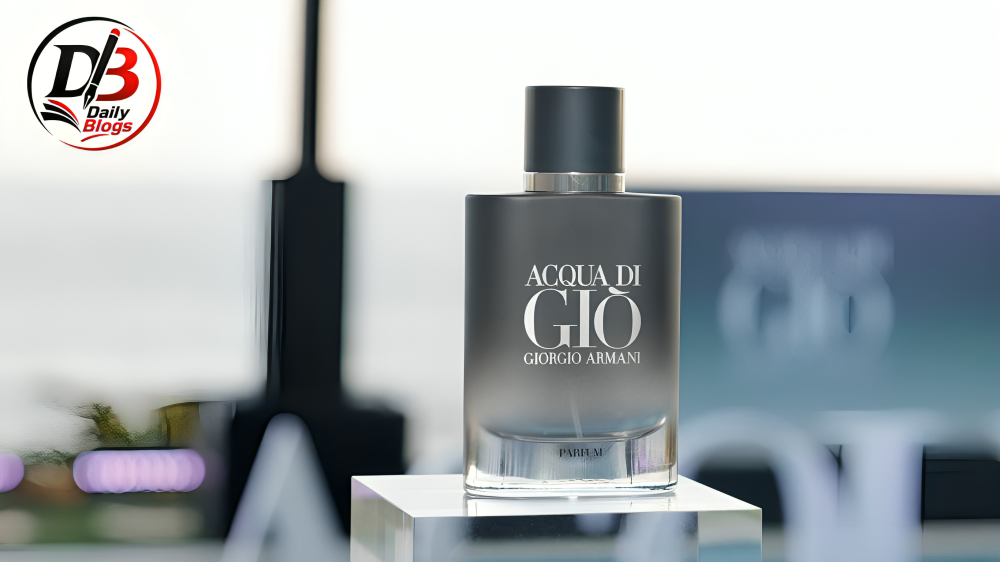
Few scents have earned the kind of universal recognition enjoyed by Acqua di Gio cologne. Since its debut in the mid-1990s, it has become something close to a cultural shorthand for freshness, confidence and effortless masculinity. Walk through any department store fragrance counter and its distinctive bottle, cool and translucent, still commands its own space among newer arrivals.
What makes Acqua di Gio cologne so enduring isn’t a marketing gimmick or a passing trend. It’s a genuine story of creative vision, careful craftsmanship and a designer’s personal connection to a place he loved. That story has kept the fragrance relevant across three decades, several generations of wearers, and a fragrance industry that rarely lets anything stay popular for long.
This feature looks at how Acqua di Gio cologne came to be, the people behind its creation, the moments that shaped its reputation, and why it remains one of the most talked-about men’s fragrances in the world today.
Origins and Background
Acqua di Gio cologne was born from a very specific source of inspiration: Pantelleria, a rugged volcanic island in the Strait of Sicily, roughly midway between Sicily and the coast of North Africa. Giorgio Armani’s first idea for the fragrance took shape after he spent time on the island, drawn in by its dramatic landscape of light, air and water.
Armani was said to have been captivated by the raw energy of the sea during his visits, and he wanted to translate that feeling, rather than any single scent, into a fragrance. He set out to create something that captured Pantelleria’s intensity and luminosity, along with the freshness that seems to radiate from a coastal landscape. The result was less a conventional cologne and more an attempt to bottle a memory of the sea itself.
To bring that vision to life, Armani turned to Alberto Morillas, one of the fragrance industry’s most respected noses, whose credits already spanned some of the era’s most recognisable scents. Morillas worked closely with Armani to distil the spirit of the Mediterranean into a single, cohesive fragrance, blending notes of sea salt, Calabrian bergamot, neroli, jasmine, patchouli and cedar. Some accounts also credit perfumers Annick Ménardo and Christian Duriez as contributors to the composition, though Morillas is most widely recognised as its principal creator.
Acqua di Gio cologne for men was officially launched in 1996, arriving at a moment when the fragrance market was hungry for something lighter and more youthful than the heavier, more traditional colognes that had dominated the previous decade.
Rise to Fame and Recognition
Acqua di Gio cologne didn’t become an instant sensation overnight. Its early years were shaped by Armani’s characteristically selective approach to retail, meaning the fragrance built its reputation gradually rather than through mass-market saturation. Over the following decade, as distribution widened into more department stores across Europe and North America, it steadily grew into one of the best-known men’s fragrances on the market.
Central to its appeal was the fragrance’s composition. <cite index=”5-1″>Opening with a bright hit of citrus, lemon, lime and orange mingling with Calabrian bergamot, the top notes give way to green tangerine and neroli before settling into a heart built around sea-inspired accords, jasmine, freesia and peach.</cite> That evolution, from sharp citrus freshness to a warmer, musky base of cedar and patchouli, gave the scent a versatility that suited both daytime wear and evening occasions.
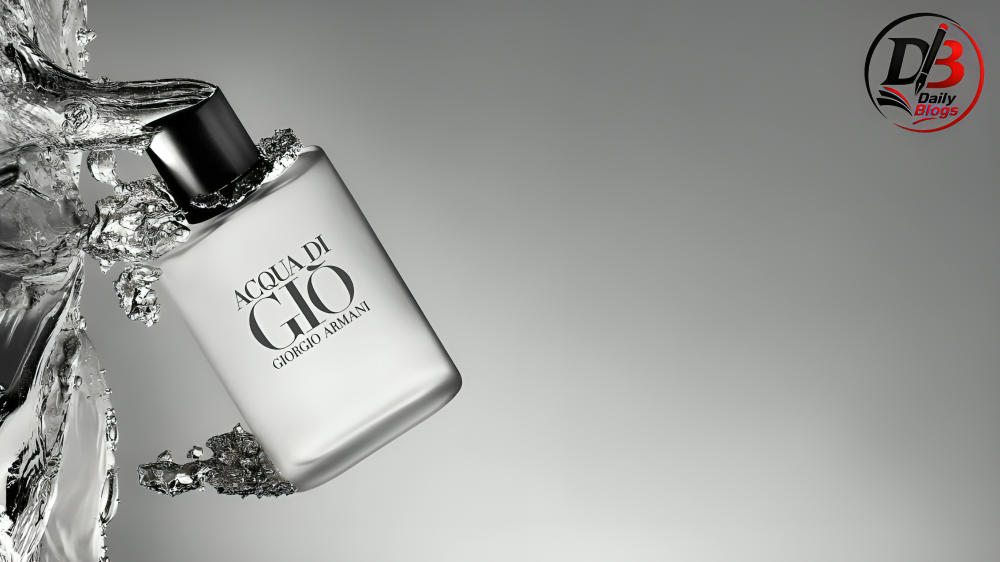
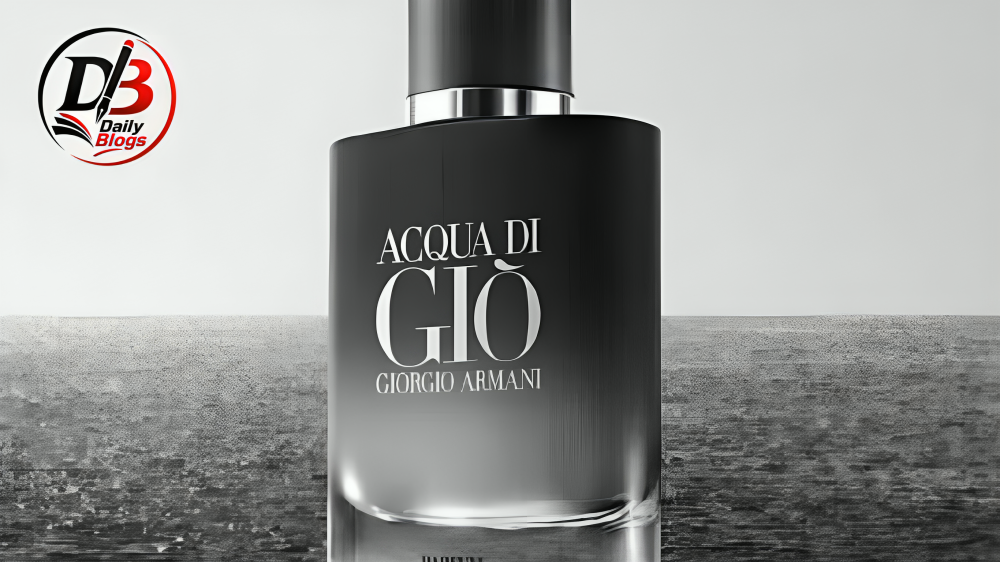
The fragrance’s visual identity played its part too. The bottle’s architectural design, with its clean lines and translucent, wave-polished appearance, became instantly recognisable, and Armani enlisted some of the world’s most celebrated photographers, including Herb Ritts, Peter Lindbergh and Bruce Weber, to shape its advertising campaigns over the years.</cite> These images, often shot in stark black and white against dramatic coastal backdrops, reinforced the fragrance’s association with a confident, sea-connected masculinity.
By the early 2000s, Acqua di Gio cologne had become something of a benchmark. Competitors across the industry launched their own aquatic fragrances in its wake, and it’s still regularly cited by perfume critics as the scent against which other “fresh aquatic” colognes for men are measured, nearly three decades after its release.
Evolution and Turning Points
No fragrance survives thirty years in a competitive market without adapting, and Acqua di Gio cologne has seen its share of changes. As with many long-running scents, reformulations over the years, driven by shifting regulations on certain fragrance ingredients and changing production standards, have occasionally sparked debate among long-term fans about whether the modern version matches the original’s character. This kind of discussion is common across the fragrance world and isn’t unique to Armani’s flagship scent.
The brand has also used the fragrance’s success as a foundation for expansion rather than resting on the original formula alone. Acqua di Gio Profumo, launched in 2015, offered a deeper, more intense interpretation built around incense and patchouli, aimed at wearers who wanted something with greater longevity for evening or cooler-weather use. Further additions to the line, including Profondo and more recent eau de parfum editions, have kept the franchise evolving while the original eau de toilette remains, by most retail accounts, the best-selling entry in the range.
More recently, Armani Beauty has framed the fragrance’s ongoing development around sustainability, introducing refillable packaging and supporting environmental initiatives tied to the brand. It’s a reflection of how even a scent rooted in 1990s design sensibilities has had to respond to changing consumer expectations around packaging and environmental responsibility.
The Fragrance Family and Public Reception
Since its original release, the Acqua di Gio name has grown into a wider collection rather than a single product. Alongside the men’s fragrance, Armani introduced Acqua di Gioia for women, extending the “water” concept into a separate but thematically linked scent. Within the men’s range, flankers such as Acqua di Gio Profumo, Profondo and various eau de parfum editions have given wearers different intensities and seasonal options while staying anchored to the same aquatic identity.
Public reception has remained consistently positive across generations of wearers. It’s frequently mentioned in lists of the best-selling and most iconic men’s fragrances of all time, and industry reporting has noted that a bottle of Acqua di Gio cologne sells somewhere in the world roughly every few seconds, a testament to its enduring commercial reach. Fragrance retailers and reviewers alike continue to describe it as one of the more reliable “signature scent” choices for men who want something universally wearable rather than polarising.
Later Years and Current Standing
Acqua di Gio cologne remains in active production and continues to anchor Armani’s men’s fragrance portfolio today. The brand regularly refreshes its advertising with new faces and campaigns, a tradition that stretches back to the fragrance’s earliest years and has featured models and athletes including Simon Nessman, Luca Dotto and Jason Morgan across different eras of the marketing.
The fragrance also continues to be sold alongside its various flankers, giving newer customers multiple entry points depending on whether they prefer the lighter original, the deeper Profumo, or newer eau de parfum interpretations. Armani Beauty, now operating in partnership with the L’Oréal Group, has kept the Acqua di Gio name central to its identity, treating it less as a legacy product and more as an ongoing flagship.
Giorgio Armani himself passed away in 2025, a moment that prompted widespread tributes across the fashion and fragrance industries. For many long-time wearers, Acqua di Gio cologne remains one of the most personal and lasting parts of his design legacy, a scent that continues to be worn, gifted and rediscovered by new customers who weren’t even born when it first launched.
Quick Facts
| Detail | Information |
| Fragrance Name | Acqua di Gio (pour Homme) |
| Launch Year | 1996 |
| Creator/Designer | Giorgio Armani |
| Principal Perfumer | Alberto Morillas |
| Fragrance House | Giorgio Armani (Armani Beauty, L’Oréal Group) |
| Fragrance Family | Aromatic Aquatic |
| Inspiration | Pantelleria, Italy |
| Known For | Defining the modern “aquatic” fragrance category |
| Notable Flankers | Acqua di Gio Profumo, Profondo, Eau de Parfum |
Note: Figures and details above are drawn from publicly available brand and retail sources; exact sales figures are not independently verifiable.
Legacy and Lasting Impact
It’s rare for a single fragrance launch to reshape an entire category, but Acqua di Gio cologne comes close. It helped establish the “aquatic” genre as a mainstream force in men’s fragrance, influencing countless other releases that tried to capture a similar sense of sea air and citrus freshness. Even fragrances positioned as direct competitors are still routinely compared back to it, which says a great deal about how firmly it set the template.
Part of its lasting appeal lies in its balance. It’s fresh without being forgettable, masculine without leaning on heaviness, and versatile enough to suit an office, a beach holiday or an evening out. That combination is harder to achieve than it sounds, and it’s a large part of why Acqua di Gio cologne has managed to stay relevant while so many of its 1990s contemporaries have faded from shelves.
For Armani, it also marked a turning point in the brand’s fragrance business, helping cement Giorgio Armani as a serious name in perfumery rather than simply a fashion house that happened to sell scent as an accessory. That shift in perception has shaped how the brand has approached fragrance ever since.
Conclusion
Nearly thirty years on, Acqua di Gio cologne still occupies a rare position in the fragrance world: instantly recognisable, consistently reformulated to stay current, and yet somehow unmistakably itself. Its story is really the story of a single, strong idea, bottling the feeling of standing beside the Mediterranean, executed with enough care and consistency to outlast trends that came and went around it.